Barrow-in-Furness stands alone as the nation's sole builder of nuclear submarines, a distinction that has shaped the town's identity for more than a century. On 22 September 2025, this contribution to national defence was formally recognised when King Charles III granted the town Royal Port status.
A Shipbuilding Tradition Dating to 1852
The first vessel launched from Barrow's fledgling yard was the Jane Roper in 1852. Within two decades, the Barrow Shipbuilding Company had incorporated and begun producing steamships, including the 3,000-ton Duke of Devonshire launched in 1873. Vickers & Sons acquired the company in 1897, setting the stage for the industrial dominance that would follow.
By 1914, Vickers at Barrow had constructed 94 per cent of the UK's advanced submarine fleet. The yard's reputation for excellence in underwater vessel construction was firmly established, with the workforce growing alongside the town itself. Population surged from just 700 in 1851 to 18,584 by 1871, and then to 47,259 by 1881. During the First World War, the population reached an estimated 82,000.
The Nuclear Age Arrives
The launch of HMS Dreadnought in 1960 marked Barrow's entry into nuclear propulsion. As the Royal Navy's first nuclear-powered submarine, Dreadnought demonstrated the yard's capacity to construct vessels at the cutting edge of technology. From that point forward, the shipyard concentrated almost exclusively on submarine manufacture.
Since 1963, Barrow has produced all but three of the Royal Navy's nuclear-powered submarines. This concentration of expertise makes BAE Systems Submarines one of only a handful of shipyards worldwide capable of designing and building nuclear submarines from the keel up.
Devonshire Dock Hall: A Landmark Visible for Miles
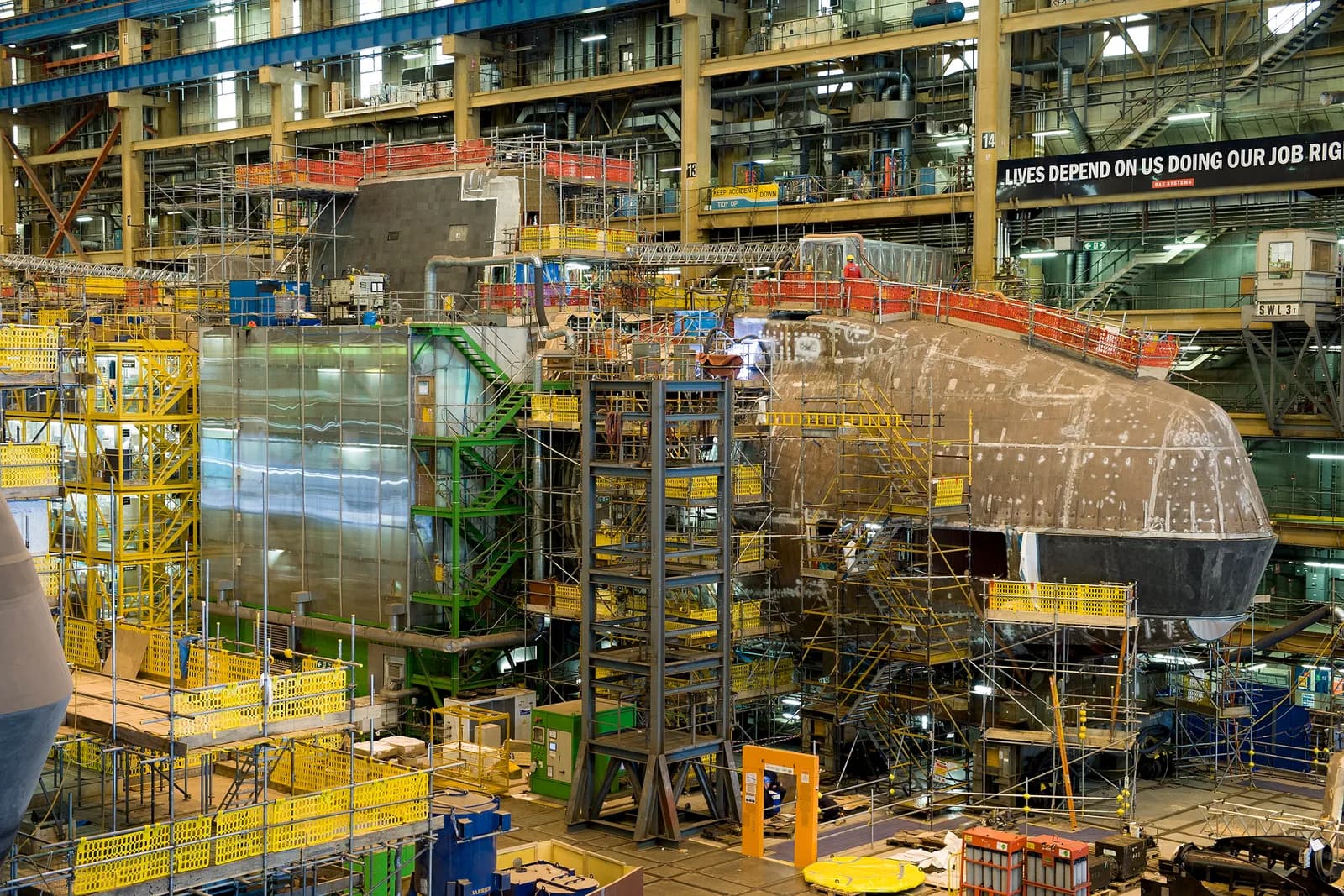
The most visible symbol of this industry is Devonshire Dock Hall, completed between 1982 and 1986. At 51 metres tall and covering 35,000 square metres, it is the tallest building in Barrow and can be seen from Blackpool, more than 20 miles away across Morecambe Bay. The indoor shipbuilding complex allows construction to proceed regardless of weather, a significant advantage given Cumbria's unpredictable climate.
Adjacent to the hall, the Central Yard Complex continues to expand, with new facilities under construction to support the Dreadnought-class programme.
Current Operations and Employment
Today, BAE Systems Submarines employs approximately 9,000 people, making it the largest shipyard in the United Kingdom by workforce. The facility is currently completing the Astute-class programme, with seven nuclear attack submarines scheduled for completion by the end of 2026. The sixth boat, HMS Agamemnon, was commissioned during the King's September 2025 visit.
Construction of the Dreadnought-class ballistic missile submarines is now underway. These four vessels will carry the UK's Strategic Nuclear Deterrent from the 2030s onward. The AUKUS partnership with Australia and the United States has further cemented the shipyard's long-term future.
The Royal Port Designation
The grant of Royal status to the Port of Barrow represents only the fourth such designation in England. Letters Patent were presented at Barrow Town Hall during the King's visit, recognising the port's historic and ongoing contribution to national defence and maritime industry.
The Royal Charter acknowledges nearly 125 years of submarine construction for the Royal Navy, beginning with Holland 1 in 1901. To date, the yard has built 312 submarines, 373 merchant ships, and 148 naval surface vessels.
Regeneration Investment
The 2025 Royal visit also highlighted substantial investment in the town's future. The £200 million Barrow Transformation Fund will support regeneration over the next decade, focusing on town centre improvements, transport links, housing, and skills development. A separate £5 million Team Barrow Social Impact Fund will support local charities.
The King also visited The Bridge Centre, a careers hub supporting town centre regeneration and connecting residents with employment opportunities at the shipyard and beyond.
Exploring Barrow's Heritage
For residents and visitors interested in this history, the Dock Museum offers a comprehensive overview. Built atop a former dry dock, the museum traces the town's evolution from a small hamlet to an industrial powerhouse. Exhibits include models of vessels constructed at the yard and displays on the lives of the shipbuilders who made it possible.
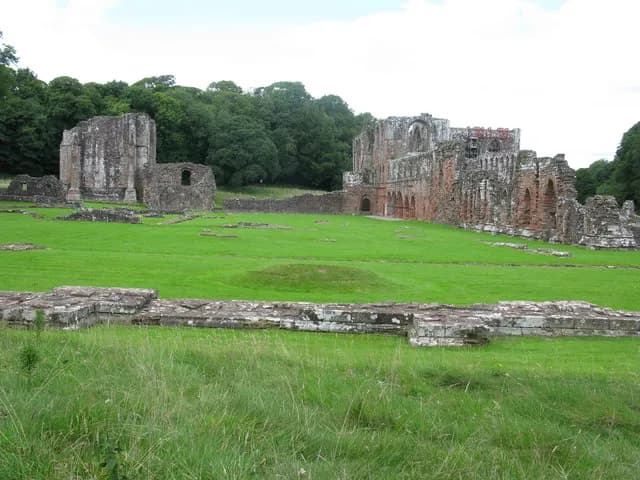
Furness Abbey, founded in 1123, predates the industrial era by centuries. As the second-richest Cistercian abbey in England, its red sandstone ruins provide a striking contrast to the steel and concrete of the modern shipyard. Piel Castle, a 14th-century fortress built by the Abbey monks, sits on Piel Island at the mouth of the harbour.
Walney Island offers nature reserves and beaches for those seeking respite from industrial heritage. The island's northern nature reserve and southern nature reserve provide habitat for natterjack toads and grey seals, among other species.
Community and Identity
The shipyard's presence has created a distinct community identity. Generations of families have worked at the yard, passing skills and knowledge from father to son and, increasingly, to daughters as well. The workforce peaked at 14,500 in 1990 before contracting to 5,800 by February 1995 following post-Cold War defence cuts. Today's workforce of 9,000 represents a significant recovery.
Local businesses have long served this concentrated industrial workforce. Pubs, cafes, and shops around the town centre have adapted to shift patterns and employment cycles. The recent regeneration investment aims to diversify the local economy whilst maintaining the shipyard's central role.
Renewable Energy Transition
Barrow's port has adapted to changing economic realities. The Barrow Offshore Wind Farm, operational since 2006, helped establish the town as a hub for renewable energy. Walney Wind Farm, commissioned in 2011, briefly held the title of world's largest offshore wind farm. The Walney Extension, completed in 2018, added further capacity. Together, these developments generate 607 megawatts, sufficient to power more than half a million homes.
The port also handles wood pulp imports totalling 75,000 tonnes annually, along with granite and aggregate exports. Pacific Nuclear Transport Limited operates specialised vessels from the port for transporting nuclear materials.
A Town Defined by Its Work
Barrow's identity remains inseparable from its shipyard. The Royal Port designation acknowledges this legacy whilst pointing toward a renewed future. For residents, this recognition validates generations of work that has largely occurred out of public sight, behind the security fences and within the massive structures visible across the bay.
The town's challenge now is to balance this industrial heritage with the needs of a modern community. The £200 million transformation fund offers an opportunity to reshape the town centre, improve connectivity, and create the kind of amenities that retain young people and attract new residents.
Whether watching a submarine launch from the waterfront, visiting the Dock Museum, or simply observing Devonshire Dock Hall against the evening sky, Barrow's residents live with visible reminders of their town's unique place in the nation's defence. The Royal Port of Barrow now carries this legacy into its next chapter.