Born Nellie Lord on 4 October 1889 in Barrow-in-Furness, Nella Last was an ordinary housewife who created one of the most extraordinary records of British life in the twentieth century. Her diaries, written over 27 years for the Mass-Observation project, span approximately 12 million words; two million of those captured everyday life during the Second World War.
The Beginning: Housewife, 49
In 1939, Mass-Observation, a social research organisation founded by Charles Madge and Tom Harrisson, invited ordinary people to record their daily lives. Nella Last was one of 480 volunteers who responded. She was 49 years old, married to Will Last, a shopfitter and joiner, and had two sons: Arthur, born 1913, and Clifford, born 1918.
Her first entry was headed simply "Housewife, 49"; that label would eventually give its name to a Bafta-winning television drama. Unlike many volunteers who wrote for months or a few years, Nella continued until 1966, producing one of the longest diaries in the English language.
Life on Ilkley Road
The Last family lived at 9 Ilkley Road, a modest address that placed them in the heart of Barrow's industrial community. The town's shipbuilding heritage, centred on Vickers (now BAE Systems), shaped the rhythms of local life. Barrow's steelworks had once been the largest in the world during the 1870s, and the town earned the nickname "the English Chicago" for its rapid industrial growth.
Nella's diary entries document the texture of domestic life in this shipbuilding town: rationing queues, blackout curtains, the Women's Voluntary Service (WVS), and the British Red Cross. Mrs Waite, head of the local WVS, appears in the diaries as a figure of authority and community organisation.
The Barrow Blitz
In April 1941, the war came directly to Ilkley Road. The Barrow Blitz, a series of Luftwaffe raids targeting the shipyards, killed 83 people and damaged 11,000 houses. Nella's own home at 9 Ilkley Road was destroyed in the bombing.
Her diary records the immediate aftermath: the shock, the displacement, and the resilience of neighbours helping neighbours. These entries provide an unvarnished civilian perspective on the Blitz, distinct from official narratives and military histories. The raids were part of a broader campaign to disrupt British naval production; Barrow's shipyards were producing submarines and warships essential to the war effort.
Note: Diary entries from January 1944 to May 1945 are missing from the archive, lost before the collection was transferred to the University of Sussex.
Beyond the Kitchen Sink
What distinguishes Nella's diaries is their emotional honesty and growing self-awareness. Critics have identified proto-feminist themes in her writing: a woman documenting her own liberation from the confines of housewifery through wartime volunteer work, and gradually learning to stand up to a domineering husband.
Her entries chronicle changing marriage dynamics, shifting gender roles as women entered factories and civil defence, and her own developing confidence. She wrote candidly about the mental strain of war, family tensions, and the small pleasures of a cup of tea or a successful cake made with rationed ingredients.
From Private Papers to Public Archive
After Nella's death on 22 June 1968, her diaries remained part of the Mass-Observation Archive. An edited selection, "Nella Last's War: A Mother's Diary, 1939-45," was first published in 1981, edited by Richard Broad and Suzie Fleming. It was republished in 2006 by Profile Books.
Two further volumes followed: "Nella Last's Peace: The Post-war Diaries of Housewife 49" (2008) and "Nella Last in the 1950s" (2010). These books revealed that Nella had continued writing through the austerity years, the establishment of the welfare state, and the social transformations of the 1950s.
The Bafta-Winning Adaptation
On 10 December 2006, ITV broadcast "Housewife, 49," a television film written by and starring Victoria Wood as Nella Last. Directed by Gavin Millar, the production also featured David Threlfall as Will Last and Stephanie Cole as Mrs Waite.
The drama won two Bafta Awards in 2007: Best Single Drama and Best Actress for Victoria Wood. It also won Best Single Drama at the Royal Television Society Programme Awards. A stage adaptation premiered at the Old Laundry Theatre in Bowness-on-Windermere in September 2013.
Where to Find the Diaries Today
The original diaries are held at The Keep in Brighton, a purpose-built archive that opened in November 2013. The £19 million facility houses the Mass-Observation Archive, including Nella's original pencil-written pages, along with the East Sussex Record Office and Brighton & Hove Museums collections.
The archive is open to researchers on Tuesdays through Thursdays, 10am to 4pm; Fridays and Saturdays, 10am to 1pm. Some materials are also available digitally through Adam Matthew Digital's "Mass Observation Online."
Legacy in Barrow
Nella Last remains one of Barrow's most significant cultural figures, though she would have been surprised by the description. Her younger son, Clifford, emigrated to Australia after the war and became a noted sculptor; works by him are held in the Ballarat Fine Art Gallery.
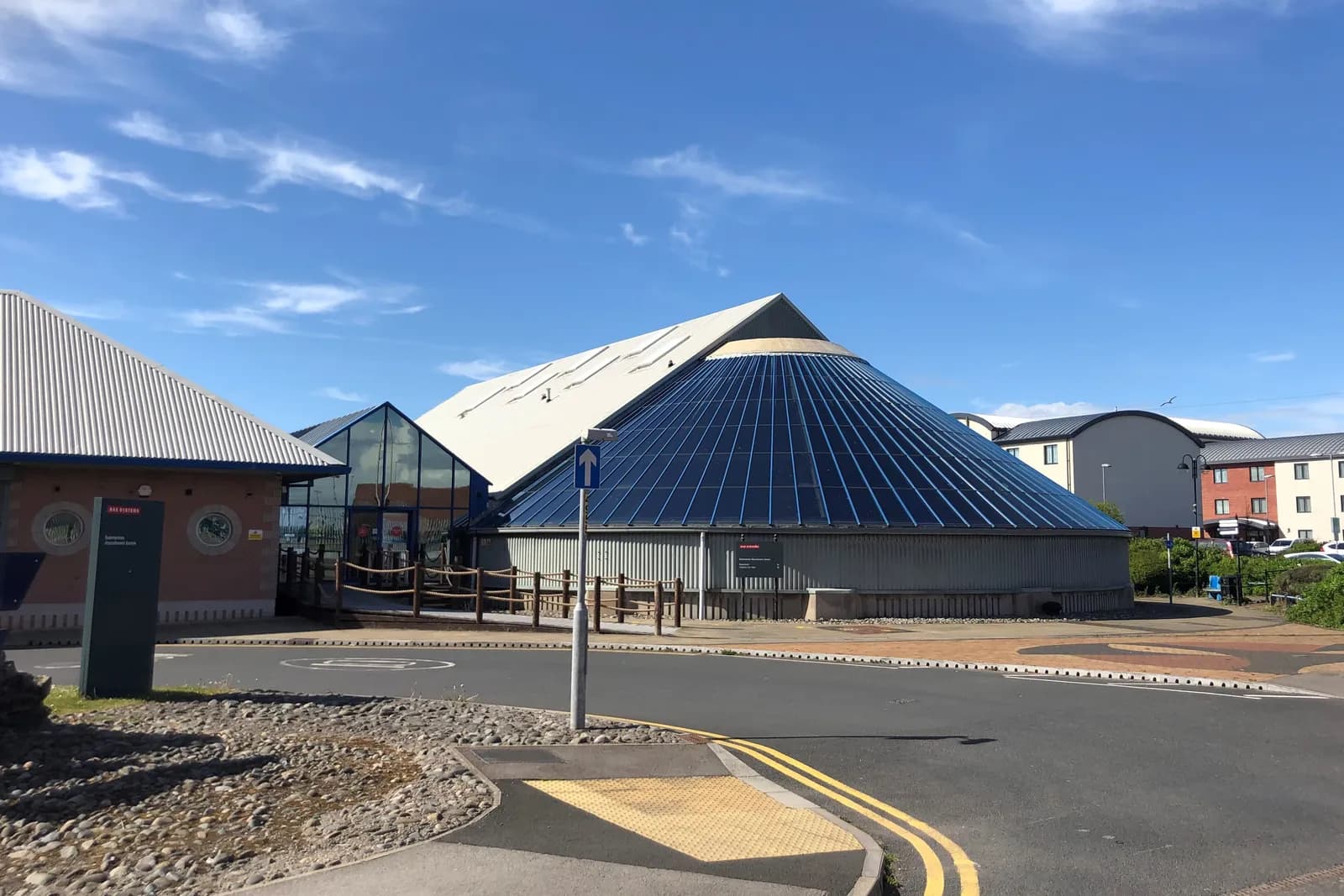
For Barrow residents today, the diaries offer a mirror to the town's past: the shipyards that dominated employment, the tight-knit streets of terraced housing, the community organisations that sustained civilians through the darkest years of the war. The Dock Museum, located on the site of a former dry dock dating from 1872, traces this history and displays materials related to Barrow's wartime experience.
Nella Last set out to document her own life. In doing so, she preserved the voice of an ordinary Barrow housewife, and gave future generations an unmatched window into how this town, and this nation, lived through the twentieth century.